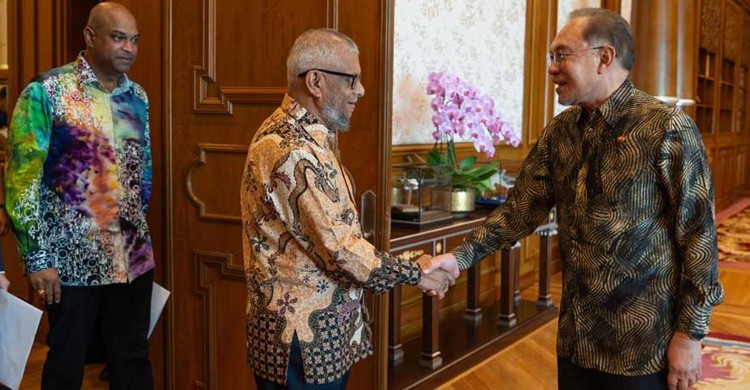
Bangladesh Spent Sixteen Years Under a ‘Darkened Sky’: Tarique Rahman

Monojog Prokash Desk
Published: 10 December 2025, 07:32 pm

BNP Acting Chairman Tarique Rahman has described the past sixteen years in Bangladesh as a period overshadowed by “darkness,” marked by political repression, enforced disappearances, fabricated charges, and widespread suppression of dissent. His remarks came in a statement posted on Facebook on Wednesday, commemorating Human Rights Day.
According to Tarique, the country lived “beneath a darkened sky” for sixteen long years. While some citizens felt the oppression directly, many endured it silently. For those whose political beliefs differed from the ousted administration’s ideology, he said, the experience was harrowing—midnight raids, made-up legal cases, violence, a climate of fear, and families endlessly waiting for loved ones who never returned.
Tarique stated that no political group suffered more than the BNP. Its leaders, activists, and supporters accounted for the largest share of victims of extrajudicial killings, enforced disappearances, custodial deaths, and false prosecutions. During the 2024 mass uprising, he added, BNP supporters again bore the heaviest casualties in terms of deaths and injuries.
However, the suffering, he stressed, extended far beyond partisan lines. Students, journalists, writers, bystanders, and ordinary citizens were also affected by a climate where fear replaced the “everyday essentials”—the dignity, safety, and freedom of expression that this year’s Human Rights Day seeks to reaffirm.
Tarique said he himself was silenced under an order that prohibited newspapers, electronic media, and social media in Bangladesh from publishing or airing his words since 2015. Even under such restrictions, he claimed he continued to advocate for democracy and the rights denied to millions.
He also highlighted the struggles of BNP Chairperson Khaleda Zia, describing her as a powerful symbol of resilience. Her years of imprisonment, politically motivated cases, and repeated attempts to sideline her mirrored the broader experience of a society forced to live under increasing authoritarian pressure. Despite this, Tarique said, she remained unwavering in her belief that rights belong to every citizen and that a nation cannot prosper when fear dictates public life.
Tarique spoke personally as well, noting his mother’s suffering as she saw one son imprisoned and tortured and later lost another. Yet, he emphasized that pain does not always foster bitterness; instead, it can shape individuals into guardians of a more just future. He said Khaleda Zia exemplifies this belief, showing how endurance can lead to national renewal rather than retaliation.
He called for a future that transcends partisan divides—a Bangladesh where human rights are protected, political diversity is embraced, dissent is not criminalized, and no individual is erased for their beliefs. The BNP, he said, stands for reconciliation over revenge, insisting that no citizen should fear the very institutions meant to safeguard their rights.
Reflecting on Human Rights Day, Tarique mentioned names such as Abrar Fahad, Mushtaq Ahmed, Ilias Ali, Sajedul Islam Sumon, and journalist couple Sagar and Runi—individuals whose stories serve as reminders of why injustice and impunity must never be allowed to recur.
He concluded by saying that despite enduring immense suffering, the BNP has emerged stronger, holding firm to the belief that truth, justice, accountability, and reconciliation—rooted in the rule of law—can build a Bangladesh where every voice is valued and human rights form the foundation of the nation’s future.
Politics


Read More
Mithu Murad Receives BMS Best Personality Award 2026 in Journalism
Civil–Military Harmony Essential for Strong State Building: Defence Adviser at DC Conference
Seven Arrested, Including Mastermind, Over Extortion Attempt at CKD Hospital